
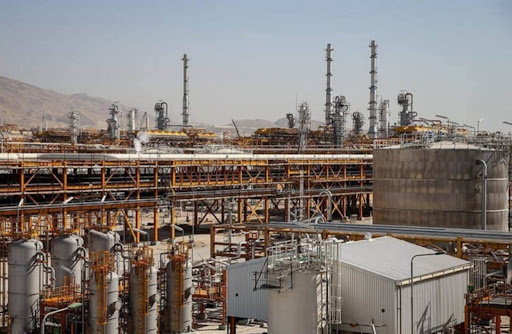
Iran issued what amounted to a global energy warning on Wednesday, threatening to destroy energy infrastructure across the Gulf and disrupt oil and gas supplies worldwide, after Israeli forces struck the South Pars gasfield. The Revolutionary Guards named specific targets in Saudi Arabia, the UAE, and Qatar and ordered their evacuation. Oil prices rose sharply on the news, approaching a multi-year high of $110 a barrel.
The South Pars gasfield, the world’s largest natural gas reserve, is fundamental to Iran’s energy economy. Its targeting by Israel — with reported US backing — was unprecedented and marked a decisive shift in the conflict’s scope. The US and Israel had previously treated Iranian energy infrastructure as a red line not to be crossed, understanding that doing so could trigger the very chain of events now unfolding.
Iran’s state media identified Saudi Arabia’s Samref refinery and Jubail petrochemical complex, the UAE’s al-Hosn gasfield, and Qatar’s Mesaieed complex and Ras Laffan refinery as targets. All personnel were urgently ordered to leave. Iran’s Asaluyeh governor said the war had entered a “full-scale economic” phase and that the US-Israeli strike was an act of “political suicide” with no rational justification.
Brent crude rose nearly 5% to $108.60 per barrel, while European gas markets climbed more than 7.5%. Gulf oil exports had already fallen 60% from pre-war levels, with the Strait of Hormuz blockaded by Iran and multiple oil facilities across the region damaged or destroyed. Iran had continued to export its own crude through the strait even as it blocked Gulf neighbors’ shipments, creating a significant strategic imbalance.
Qatar’s government spokesperson Majid al-Ansari warned that attacking energy infrastructure was a threat to global energy security and regional populations. As the international community scrambled to respond, Iran’s threatened strikes remained on a short fuse. The conflict had reached a moment of maximum danger — one where a single escalatory move could trigger consequences that would be felt in every corner of the global economy.