
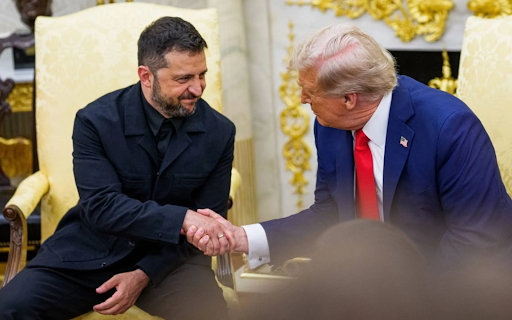
The current push for a Ukraine peace summit is a textbook example of a superpower leveraging its influence to force a diplomatic resolution. The initiative, originating in Washington, is characterized by a top-down approach, rapid timelines, and the direct involvement of the U.S. President.
The process began at the center of American power, with President Trump hosting President Zelenskyy and European allies. This allowed the U.S. to align its partners before engaging with Russia. The next step was a direct, leader-to-leader channel: a phone call between Trump and Putin, where the alleged breakthrough occurred.
With this foundation, the White House then moved to a public pressure campaign, announcing the two-week deadline and Putin’s supposed agreement. This move took the private discussions public, creating a sense of global expectation and making it harder for any party to back down.
Finally, the U.S. has begun to define its own stake in the outcome, clarifying its potential military commitments (air support) and limitations (no ground troops). This entire sequence—from private alignment to public pressure to defining commitments—is the anatomy of a superpower’s peace push, driven from Washington with a palpable sense of urgency.