
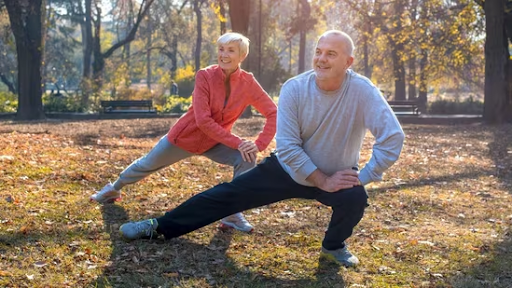
In an era of constantly evolving fitness trends, one movement educator continues to rely on a single foundational exercise he learned over three decades ago. This enduring practice, drawn from traditional movement disciplines, offers insights into sustainable physical wellness that remain relevant across generations, particularly for those experiencing the physical changes that accompany aging.
The exercise, affectionately termed the Qi Machine by practitioners, operates on principles that differ markedly from mainstream fitness approaches. Rather than focusing on muscular development through resistance and force, it emphasizes working with the body’s inherent elastic properties. The starting position is straightforward—feet positioned at shoulder width—but the execution requires learning a specific quality of movement that transforms simple knee bouncing into a therapeutic and energizing practice.
The crucial distinction involves understanding how to drop body weight through the legs and then allow natural elasticity to generate the upward return motion. This creates a bouncing rhythm that feels light and sustainable rather than effortful and draining. Conventional squatting involves deliberate muscular contraction both downward and upward, creating significant work for the leg muscles. In contrast, this technique uses gravity for the descent and elastic recoil for the ascent, distributing the workload across different tissues and reducing muscular fatigue.
As practitioners become comfortable with the lower-body foundation, the movement naturally incorporates the upper body. Arms begin swinging in rhythm, the spine moves in gentle waves, and joints throughout the body—ankles, knees, hips—experience mobilization through natural ranges of motion. This integration creates what practitioners describe as “breathing the movement”—a state where physical motion and respiratory rhythm merge without conscious direction.
The holistic benefits extend beyond simple physical fitness. Improved circulation carries fresh blood throughout the body, joint mobility enhances daily functional movement, and the meditative quality of the practice offers mental clarity. For individuals in their forties, fifties, sixties, and beyond, this represents more than just exercise—it’s a practice that can be maintained indefinitely, adapting to changing physical capabilities while continuing to deliver meaningful wellness benefits.